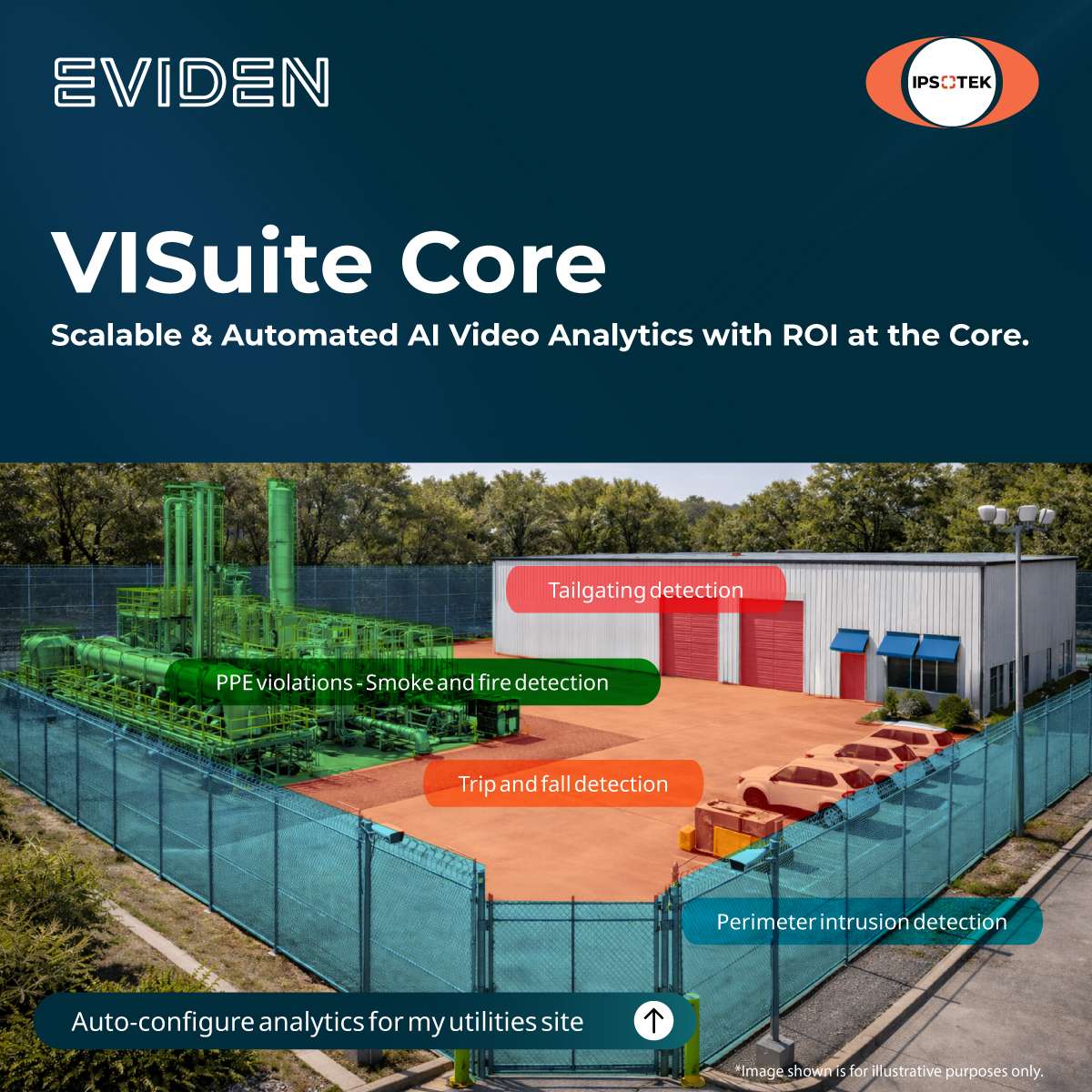
The cameras already on your campus can do more than record. In this article, Ipsotek's Sean Grimm outlines how AI-powered video analytics helps schools and universities detect threatening objects, smoke, perimeter breaches, and aggressive behavior in real time. Read the article to see how AI can help security staff make faster, more informed decisions.
How can AI video analytics improve campus security without replacing existing systems?
Most US educational campuses already have extensive camera coverage. AI-powered video analytics lets you build on that investment instead of starting again.
Rather than replacing cameras, AI connects to your existing video streams and analyses them in real time. This helps you move from passively recording incidents to actively managing risk as it unfolds.
Common use cases on campuses include:
- Threatening object detection (e.g., weapons or dangerous items)
- Smoke and fire detection for faster emergency response
- Perimeter intrusion monitoring to spot unauthorised access
- Aggressive behaviour detection related to fights, bullying, or assaults
- General real-time situational awareness across large or complex sites
Instead of staff watching dozens or even hundreds of camera feeds, AI flags predefined events and sends alerts to security teams or campus police. This helps:
- Accelerate response times to developing threats
- Reduce the need for constant manual monitoring
- Direct attention to the right place at the right moment
In a context where only 56% of middle and high school students report feeling safe during the school day, schools are under pressure to reconsider how they use existing tools. AI video analytics gives districts and universities a way to reimagine their current security posture—without a full infrastructure overhaul—by turning standard cameras into more proactive safety assets.
How does AI video analytics balance safety with student and staff privacy?
Privacy is one of the most frequent concerns when campuses explore AI-enabled security. The good news is that AI video analytics can be configured to focus on behaviour and events, not identity.
Key points for privacy-conscious deployments include:
- Use existing video only: AI typically analyses the same footage your cameras already capture; it doesn’t require new types of monitoring.
- On-premises storage: Many institutions choose to keep video data stored locally, under district or university control, instead of in third-party clouds.
- Event-based analytics instead of identification: Systems can be configured to detect what is happening (e.g., a dangerous object, smoke, a perimeter breach, or signs of aggressive behaviour) without identifying who is involved.
- Optional use of facial recognition: Where facial recognition is used, it requires a biometric database and clear governance. Many education customers simply avoid this capability and rely on non-identifying analytics.
Concerns often arise from misconceptions that AI will automatically track every individual. In reality, schools and universities can design policies so that:
- Data is retained only for defined, compliant periods
- Access to video and alerts is restricted to authorised personnel
- Use cases are limited to safety and operational efficiency
Transparent communication is essential. Explaining that AI is analysing video your systems already collect, and that the focus is on events rather than personal identity, helps staff, students, and parents understand how safety can be improved without undermining privacy expectations.
What practical benefits and limitations should schools expect from AI video analytics?
AI video analytics can help schools and universities reshape how they use security infrastructure—but it is not a standalone fix. Its value comes from combining technology with clear processes and human oversight.
Expected benefits include:
- More relevant alerts, fewer distractions: The goal is not more alarms, but high-accuracy alerts that are actually actionable.
- Reduced manual monitoring: Security teams are freed from watching every camera and can focus on validated events.
- Faster, more informed responses: Real-time detection helps staff and first responders act earlier, with better context.
- Operational insights beyond security: Institutions are starting to use existing cameras for occupancy monitoring, traffic flow analysis, facility utilisation, and campus management, supporting everyday operations as well as safety.
Key limitations and risks to manage:
- False positives and alarm fatigue: If the system frequently mislabels normal behaviour (for example, a student running across a playground) as aggressive, staff may start ignoring alerts. Vendors and customers need to tune detection rules and performance carefully.
- Dependence on human decision-making: AI can flag that something needs attention, but it cannot replace human judgement. A human-in-the-loop approach—where trained staff validate alerts and decide on next steps—is essential.
- Need for clear workflows: To get real value, institutions must define who validates alerts, who gets notified, and how responses are coordinated across security, campus police, administration, and local first responders.
- Budget and adoption challenges: Higher education has generally moved faster, especially for perimeter protection, parking facilities, and campus-wide safety operations. K–12 adoption has been slower due to budget pressures, privacy concerns, and misunderstandings about what the technology actually does.
In practice, AI-powered video analytics works best as one layer in a broader security and operations strategy. It enhances what your existing teams and systems can do, helping them make faster, more informed decisions when it matters most—rather than trying to replace people or current infrastructure outright.




 Sign in with LinkedIn